“And then he told about the gold”
When Brewers Gold and Northern Brewer revolutionized the world of hops (Part 2)
“And then he told about the gold”
When Brewers Gold and Northern Brewer revolutionized the world of hops (Part 2)
By Christoph Pinzl
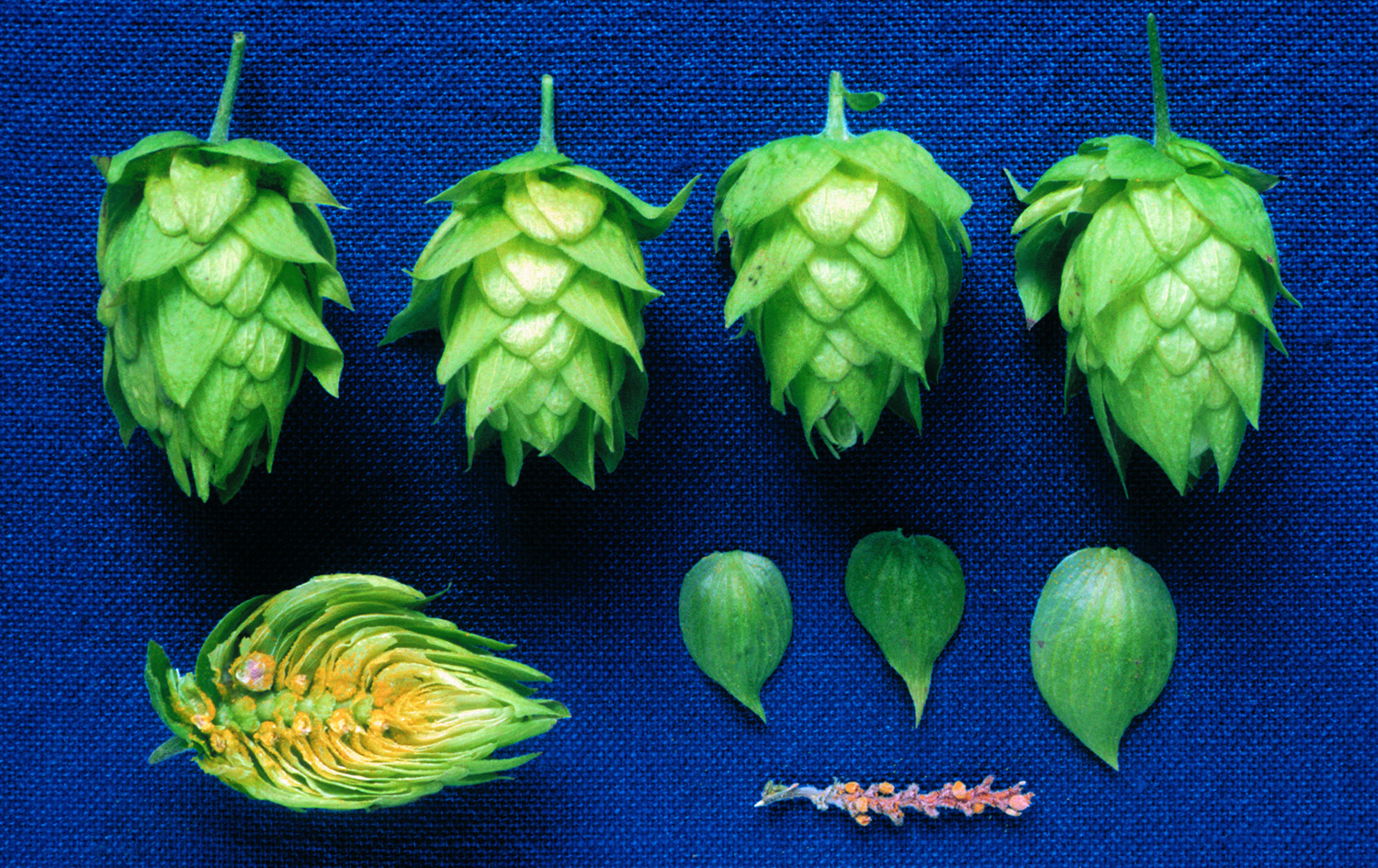
The “Gold” was not particularly resistant to disease or pests. But it had other unbeatable advantages. For one thing, its bitter substance values were far higher than those of the old local varieties. This was a blessing for the increasingly powerful lager industry with its slim, pilsner-like standard beers, where only the alpha bitter value in the hops played a role. The remedy for the growers was the yield: a Brewers Gold vine easily produced twice as many cones as Hallertauer Mittelfrüh. When elderly hop growers talked about it later, their eyes still lit up:
“An extraordinary variety, it was called Gold. And it produced hops, oh my. The hops just poured into the picking machine. It was a beautiful hop.” (Mr. G. from Niederlauterbach).
“Then came Brewers Gold, which was already a mass-produced hop. With Hallertauer, you might have grown ten hundredweight, and with that, you grew twenty, thirty hundredweight, at least. That was a lot!“ (Mr. M. from Eschelbach).
”There was once a farmer from Poperinge in Belgium who was in Wolnzach. And then he sat in the Haimerl restaurant. And then there was A., and they got talking. And then he talked about the Gold. And said that one vine yields a basketful. A whole basketful!” (Mr. S. from Wolnzach).
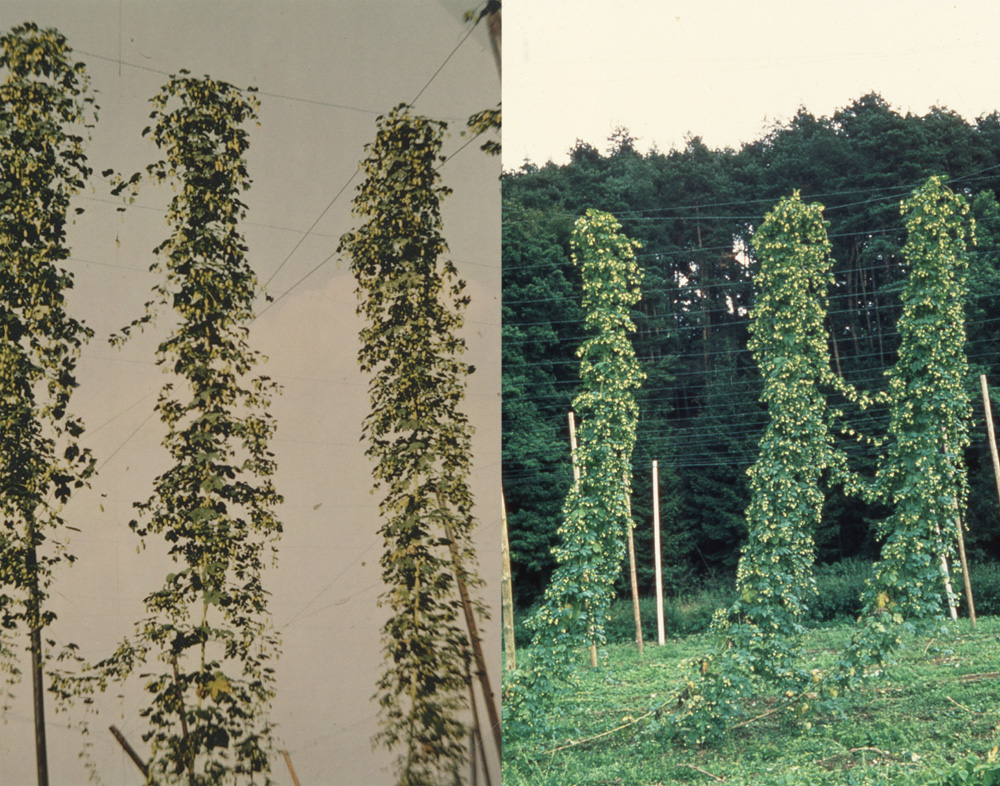
A big difference even in appearance: Hallertau Mittefrüh on the left, Brewers Gold on the right, around 1970.
In conversations with old hop growers, the superlatives sometimes rose to astronomical, fairy-tale heights: one remembered 45 hundredweight of hops per hectare (in the first year of cultivation!), the next told of 70 hundredweight, until finally there was talk of no less than 100 hundredweight of Gold hops – 20 hundredweight would have been normal at that time. Brewers Gold grew so vigorously that even the guide wires in the hop gardens had to be thicker so that the vines would not break prematurely:
“Well, in the beginning, they always skimped and only used thin wire. One guy had Gold hops, and it fell over, so we set it up again, and then it fell over again. At first, they only had 12-gauge wire. The Gold had such thick vines. That was some hop.” (Mr. R. from Wolnzach).
Brewers Gold not only caused a stir among the hop growers. It also completely disrupted the hop market. The Hop Origin Act of 1929 had once stipulated that hops in Germany had to be designated according to their origin. Hop varieties played no role in this. Hops that grew in the Hallertau region were Hallertau hops – and that was that. When hop farmers began cultivating the new variety in the 1960s, they did not have to officially register, classify, or label it anywhere. This went so far that the new “Gold-hops” could even be planted in the middle of an existing hop garden, between the old Hallertau Mittelfrüh plants. It was all hops from Hallertau, so what was the problem? The result was that harvest estimators sometimes missed the mark by up to 20% in their predicted harvest volume, and no one could predict how much hops would come onto the market in the fall. And brewers no longer had any chance of achieving their quality standards for bitterness and aroma components in hops.
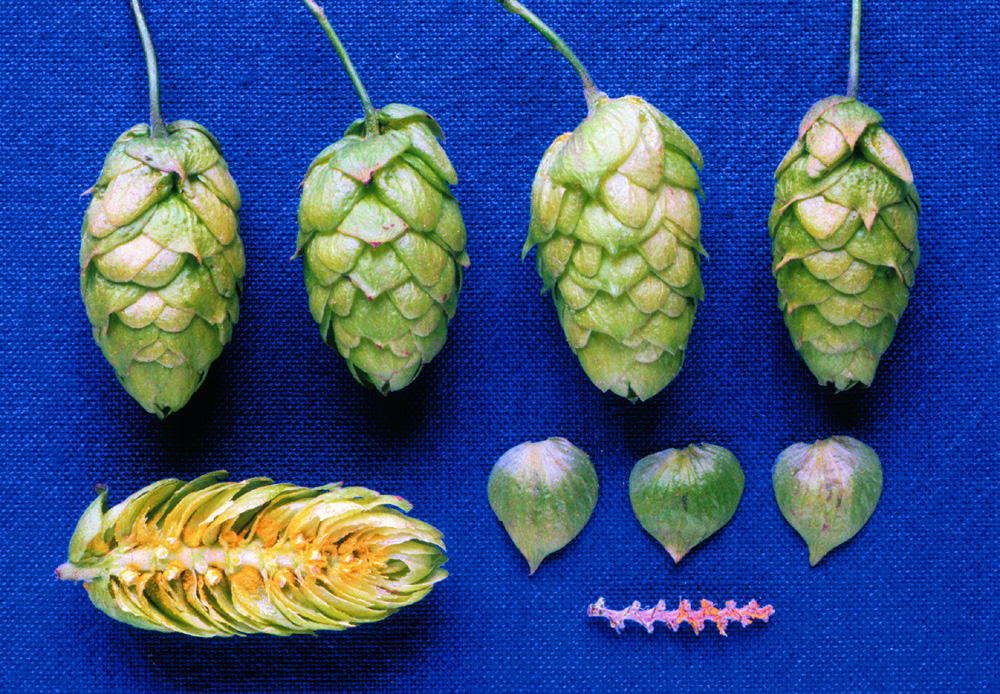
Northern Brewer
With hop products such as pellets or extract, it was no longer even possible to distinguish between the varieties, at least visually. That is why a corresponding amendment to the beer tax law in 1968 quickly put an end to such uncontrolled growth. In addition, hop researchers in Hallertau developed complex methods, such as gas chromatography, to be able to distinguish between the individual hop varieties with precision.
The Hallertau growers gradually discovered another advantage of Brewers Gold: its much later harvest time compared to the old Hallertau hops. Since the late 1950s, the extremely expensive picking machines had been standing in the yard – for just two weeks of harvesting per year. If this period could be extended, for example by adding an additional hop variety with a later harvest, the high investment would be much more worthwhile. Gold was simply worth its weight in gold.
By the early 1970s, a good half of Hallertau hops came from the two Salmon varieties. In Poperinge, the figure was already 85% at that time. But hop growers did not remain idle. Over the years, new varieties followed, even more productive, with even more bitter compounds, varieties such as Magnum and Herkules. By the mid-1980s at the latest, when GDR hop growers flooded the market with Northern Brewer at dumping prices, the mood changed. Brewers Gold and Northern Brewer gradually fell out of favor, sometimes even falling into disrepute. Today, they are hardly to be found in German hop gardens.
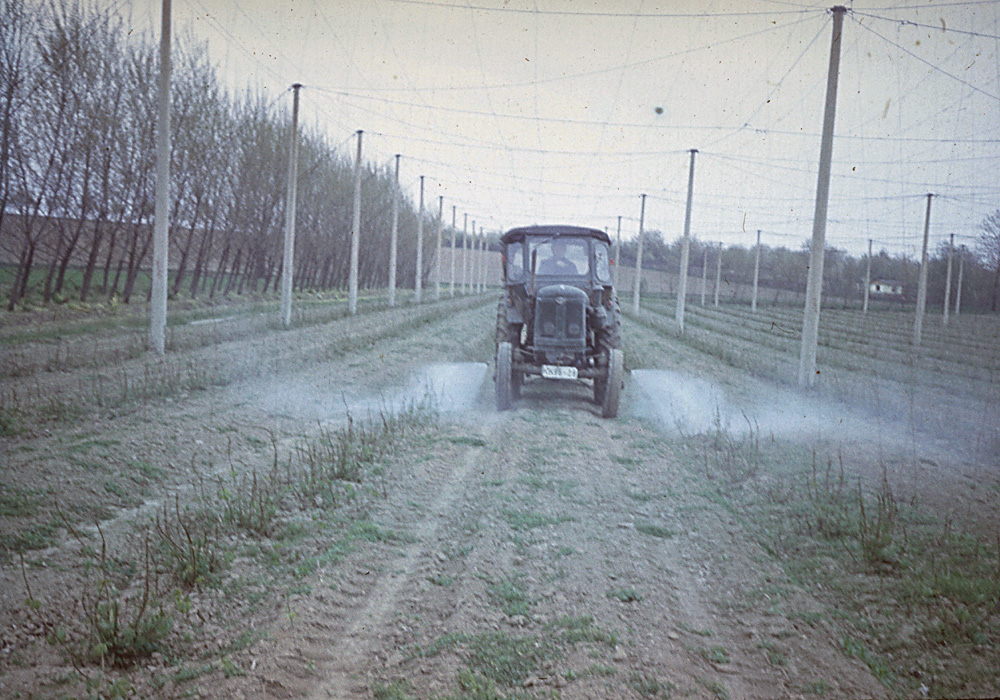
Plant protection for Northern Brewer in hop cultivation in the GDR. Gleina, 1971.
Ernest Stanley Salmon, incidentally, did not live to see the triumph of his varieties. He died in 1959, just as Hallertau growers were beginning to plant the new varieties in their hop gardens. In his home country on the British Isles, people had never been particularly enthusiastic about the newcomers from the laboratory anyway.